


Sports Memorabilia Alternative for Serious Collectors
Table of Contents
- Why Serious Collectors Are Moving Beyond Cards and Jerseys
- The Sports Memorabilia Alternative That Holds Its Value
- Investing in Historical Sports Memorabilia: What the Data Shows
- Provenance and Authentication of Historical Artifacts: A Collector's Checklist
- Comparing the Options: A Side-by-Side Look
- Tax, Liquidity, and the Risks Nobody Talks About
- Building a Diversified Portfolio With Vintage Artifacts
- Conclusion
- Frequently Asked Questions
Last Updated: September 20, 2026
Why Serious Collectors Are Moving Beyond Cards and Jerseys
The market for mass-produced cards and replica jerseys is crowded and hard to trust. A sports memorabilia alternative offers original, one-of-a-kind artifacts with documented history.
The Sports Memorabilia Alternative That Holds Its Value
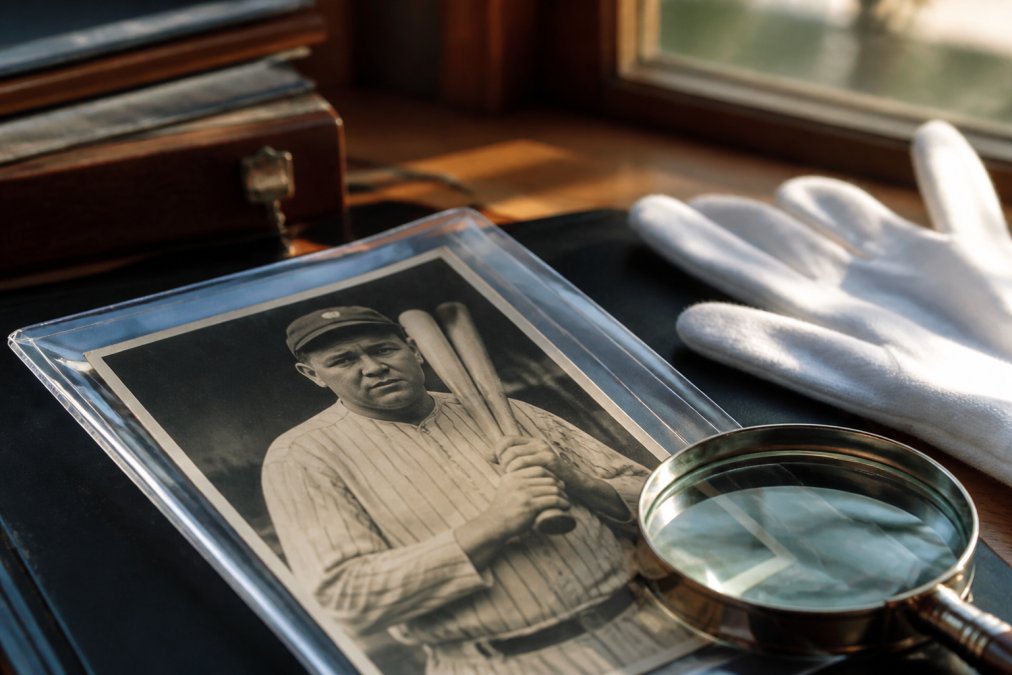
The strongest sports memorabilia alternative is original Type I photography, authenticated and encapsulated by a recognized grading service. These are first-generation photographs printed from the original negative at the time of the event, a physical artifact, not a reprint.

Type I Photographs: The Overlooked Asset Class
Type I photographs are original, first-generation prints made from the original negative within roughly two years of the event depicted. They trade at a fraction of comparable game-used equipment.
Investing in Historical Sports Memorabilia: What the Data Shows
Investing in historical sports memorabilia rewards scarcity and documentation, not hype. Pieces that hold value are original, graded by a recognized third-party service, and document a moment of historical significance. Maintaining the integrity of these assets requires a disciplined approach to preserving valuable memorabilia that prevents environmental degradation over the long term.
Valuation rests on four pillars:
- Scarcity: how many examples survive and appear on the market
- Provenance: the strength of the press stamps, captions, and documentation
- Condition: the graded state of the physical print
- Historical significance: the weight of the moment depicted
Provenance and Authentication of Historical Artifacts: A Collector's Checklist
Provenance and authentication of historical artifacts come down to verifiable documentation and third-party grading. Before any significant purchase, work through this checklist.
- Confirm the item is designated Type I or equivalently original, not a later reprint
- Verify the grading service and confirm the certification number
- Inspect the reverse for period press stamps, date stamps, and caption slugs
- Check the stamping agency against the era of the image
- Request a condition report noting any paper loss, tape, or restoration
- Confirm the seller's authenticity guarantee in writing
- Match the date stamp to the historical event depicted
Comparing the Options: A Side-by-Side Look
Original artifacts differ from mass-market collectibles in ways that matter to serious buyers. The table below summarizes long-term value across the main categories.

| Category | Supply | Authentication | Liquidity | Best For |
|---|---|---|---|---|
| Type I photographs | Extremely limited | Third-party graded | Niche but stable | Serious collectors |
| Original fight posters | Very limited | Documented provenance | Strong at auction | Display and investment |
| Graded cards | Large print runs | Mechanical grading | High volume | Entry-level trading |
| Signed jerseys | Ongoing releases | Autograph verification | Volatile | Fan-driven buyers |
Tax, Liquidity, and the Risks Nobody Talks About
Three topics get almost no honest treatment in collecting guides: tax treatment, exit mechanics, and market manipulation. Each can quietly erase the return on an excellent piece.

How the Tax Treatment Actually Works
Tangible collectibles are not taxed like stocks. Under current federal rules, gains on collectibles held more than one year are taxed at a maximum 28%, not the 20% top rate for long-term capital gains on securities (Topic no. 409, Capital gains and losses). That 8-point spread compounds over a holding period and is the most overlooked number in this market.
A few mechanics worth knowing before you buy:
- The 28% rate applies to the gain, not the sale price. If you buy at $10,000 and sell at $30,000, the $20,000 gain is the taxable amount.
- Short-term gains are taxed as ordinary income. Holding for less than a year can push you into a materially higher bracket.
- Net investment income tax may also apply. High-income collectors can face an additional 3.8% surtax on top of the collectibles rate.
- Losses are not always deductible. Collectibles losses are generally treated as capital losses, which cannot offset ordinary income beyond the annual capital loss limit.
- Donations follow their own rules. Gifting a piece to a qualifying museum or nonprofit can produce a charitable deduction based on fair market value if held long enough and properly appraised, but the appraisal and substantiation requirements are strict.
Liquidity: The Real Cost of a Slow Exit
A one-of-a-kind photograph may take months to sell, a feature of scarcity, not a flaw. Plan the exit before you enter.
The channels behave differently:
- Auction houses offer reach and price discovery, but charge a seller's commission that commonly runs in the range of 10% to 20% of the hammer price, plus possible photography, insurance, and shipping fees. They also take time, consignment windows, catalog production, and payment terms can stretch a sale across several months.
- Private sales move faster and avoid commission, but depend entirely on your network. If you do not know who the buyers are, you do not have a private channel.
- Dealer buyouts are the fastest exit and the most expensive. Expect a wholesale discount that can run 30% to 50% below retail, because the dealer is taking on inventory risk and carrying cost.
Shill Bidding and Market Manipulation
Inflated hammer prices can create a false sense of value. Shill bidding, where a seller or associate bids to push the price up, is prohibited by major auction platforms and can constitute fraud, but it is difficult to prove in the moment.
Babe Ruth Vintage Sports Memorabilia →
A few patterns that experienced collectors watch for:
- Bidder accounts with no history suddenly pushing a lot past recent comparables
- The same underbidder appearing across multiple lots from the same consignor
- Prices that spike in the final seconds with no corresponding jump in genuine interest
- A lot that reappears at a later sale after a suspiciously high result
The Risks That Compound
Tax drag, illiquidity, and manipulation do not operate in isolation. A piece bought at a manipulated price, held under a year, and sold through a dealer buyout can lose money even if the asset appreciated. Model all three before you buy.
Building a Diversified Portfolio With Vintage Artifacts
Portfolio diversification with vintage artifacts works like any asset class: spread exposure across categories, eras, and price points. But first answer how much of your portfolio should be in tangible collectibles at all, and in what form.
Sizing the Allocation
Most advisors who work with alternative-asset clients treat collectibles as a satellite position, not a core holding. A common framework caps tangible collectibles at 5% to 10% of investable assets because the class is illiquid, lightly regulated, and hard to value precisely. Within that sleeve, the goal is pieces that respond to different demand drivers.
- Core holdings (roughly half the sleeve): two or three museum-grade Type I photographs with strong provenance and third-party grading
- Display and crossover pieces (roughly a quarter): one large-format original poster or comparable artifact with visual and cultural appeal beyond pure investment
- Growth positions (roughly a quarter): one or two rarer artifacts from overlooked figures or underappreciated eras, where supply is thin and demand is building
- Liquid reserve: a small holding in more easily traded graded items so you are never forced to sell a core piece to raise cash
Fractional Ownership vs. Physical Possession
Serious collectors increasingly ask whether to own the physical asset or hold a fractional share through a platform. The two approaches solve different problems.
How Memorabilia Fits Alongside a Broader Portfolio
The value of a collectibles sleeve is not just its own return but how it behaves relative to everything else you own. Tangible sports artifacts have historically shown low correlation to public equities, which can smooth overall volatility, but only if the position is small enough that an illiquid stretch does not force a sale at the wrong time.
A few practical rules that experienced collectors follow:
- Fund the sleeve with money you will not need for at least five years. The exit timeline is unpredictable.
- Rebalance by category, not by piece. If baseball photographs have run up, trim and add to an underrepresented category rather than chasing the hot segment.
- Keep a written inventory with purchase price, date, grading certification number, and current comparable sales. You cannot manage what you have not documented.
- Insure the sleeve as a collection, not piece by piece, where possible. A scheduled valuable-items policy is usually more cost-effective than adding riders to a homeowner's policy, and it avoids the deductible and sublimit problems that come with standard coverage.
Conclusion
The challenge for serious collectors is finding original artifacts with real provenance in a market flooded with reproductions. CV Treasures offers owner-sourced, guaranteed-authentic vintage photographs, posters, and memorabilia with no reproductions or fakes, every piece one-of-a-kind, from PSA-certified Type I photographs to rare large-format originals. Get started with CV Treasures and build a collection that holds its value and tells a story.
Frequently Asked Questions
What makes Type I photographs a smart sports memorabilia alternative?
Type I photographs are original prints made from the original negative within roughly two years of the image being taken. PSA/DNA certifies them, which separates them from later reprints. Because they are one-of-a-kind or extremely scarce, they tend to hold value better than mass-produced cards. Serious collectors use them to diversify away from the volatility of the modern card market while keeping a direct tie to sports history.
How do I verify provenance and authentication of historical artifacts before buying?
Look for third-party grading and a paper trail. PSA/DNA encapsulation, original press stamps, date stamps, and captions on the back all matter. For example, a 1932 Babe Ruth photo with a Milwaukee Journal library stamp and a Sep 28 1932 date stamp carries strong provenance. Ask the seller for the full back-of-photo image and any certificate of authenticity. Without documentation, treat the piece as unverified.
Is investing in historical sports memorabilia safer than buying modern cards?
It depends on the piece, but scarcity favors vintage. Modern cards are printed in huge runs and prices swing with hype. Historical photographs and posters from the early 1900s through the 1970s have fixed supply. A 1914 Red Sox Type I photo or a 1974 Rumble in the Jungle poster cannot be reprinted as an original. That supply constraint supports long-term holding, though condition and authentication still drive value.
What should I watch out for when buying vintage sports memorabilia?
Reproductions are the biggest trap. Large-format posters are often faked as small 11x14 glossy reprints. Always check size, paper type, and printing method. For photos, confirm the Type I designation and look for period stamps. Factor in storage climate control and insurance valuation. And be aware that auction house bidding can be manipulated, so set a firm ceiling before you bid.
Can vintage posters and historical photographs fit into a diversified portfolio?
Yes. They behave differently from stocks, bonds, and modern cards, which is the point of portfolio diversification. A 39x47 Rumble in the Jungle poster or a 1916 Red Sox team photo adds an asset with low correlation to public markets. Keep physical assets to a slice of your overall holdings, store them in climate-controlled conditions, and get a professional appraisal every few years for insurance and estate planning.